Wednesday, 21 November 2018

Food, Agriculture and Biodiversity: reflections from the International Biodiversity Congress 2018

- by Tang Hung Bun, Lim Sixian

We attended the International Biodiversity Congress (IBC) on 4-6 October, in Dehradun, the capital city of Uttarakhand. Themed “Biodiversity for Ecological Civilisation”, the congress was held at the 140-year-old Forest Research Institute (FRI). Jointly organised and supported by local and international non-governmental organisations (NGOs), district and state governmental departments, the event drew a crowd of more than 700 participants. Featuring international participants and speakers, the 3-day affair seeks to pave the way for greater conversation - an appeal for collective action among different stakeholders ranging from farmers, scientists, government organisations to non-government organisations.
Venue of the congress 
- Forest Research Institute of India
Although Industrialisation and technology has been an enabler for the many conveniences we enjoy today, they have also created complex global issues such as climate change, plastic pollution, and biodiversity loss. Should we want to ensure the well being of future generations, it is necessary for us to transition from this highly industrialised state, to a civilisation that cares for the flourishing of the ecosystems and all living beings, an attitude that is grounded in biodiversity consciousness. The well being of future generations hinges greatly upon this transition.

This shift requires us to seriously contemplate, how one might be able to recognise this wealth of biodiversity as part of the story, instead of as an afterthought. Holding this intention, a curated line-up of 27 panel discussions and seminars enabled a rich dialogue that not only sought to address the challenges we face today, but to highlight pockets of opportunities. During these sessions, a variety of themes intimately associated with, and shaped by, the state of the ecosystems were discussed. These ranged from sharing about the rich biodiversity in the different bioregions of India, conditions of the natural environment, agriculture, food and nutrition. These sessions were complemented by an expo featuring booths representing various states of India, and also a poster exhibition featuring over 400 research projects undertaken by students.
Young representatives of Japan's Shumei Natural Farming Association
with Dr. Vandana Shiva (renowned environmental activist)

A booth at the expo showcasing
the diversity of seeds

Organic farmers gathering at Navdanya Farm

Sikkim - becoming 100% organic

What left a particularly deep impression was coming to know about Sikkim’s effort in protecting the natural environment and its journey towards becoming 100% organic. A state situated in northeastern India, the local government of Sikkim made a commitment in 2003 to work towards making all farmland organic. With this vision in mind, measures were put in place over the next decade. These efforts paid off when Sikkim achieved its goal in 2016. Since then, Sikkim’s commitment and achievements have continuously been highlighted as an exemplar for other states. Even then, as in any transition, there were teething problems that had to be addressed. The initial dip in agricultural yield and higher costs led to doubts and it took time for the masses to be receptive. To address these issues, the government stepped in to encourage direct transactions between farmers and consumers to bring costs down, and also to provide greater logistical support. The government also sought out opportunities to raise awareness about the benefits of maintaining the integrity of the ecosystems.

A variety of organic produce from Sikkim
The commitment towards an organic Sikkim cannot be done without also considering what was necessary to protect and conserve biodiversity. It would come as little surprise, then, that this achievement of a 100% organic agriculture also saw an improvement in the richness of biodiversity in the area. Wildlife returned. Insect populations were revived. There were also improvements in soil fertility all-round. Over time, costs became more manageable, and the quality of agricultural products improved. Following greater awareness about health and nutrition, the demand for organic products has been increasing steadily. As a recognition of Sikkim’s commitment and achievement, the Sikkim government was recently awarded the UN Food and Agriculture Organisation (UNFAO) Future Policy Gold Award. While the state of agricultural land takes centre stage in this mention, Sikkim has also been lauded for its effort to phase out the usage of plastic bags, styrofoam and plastic bottles since 1997, and along the way, enforcing a state-wide prohibition against the burning of agricultural waste.

Bhutan - the state of being carbon negative

Another country worth highlighting is Bhutan, which sits in close proximity to Sikkim. While the rest of the world hankers after a growth in Gross Domestic Product (GDP), Bhutan - a relatively small country in the Himalayas - has chosen to, instead, focus on the well being of people as a measure of development. The country became known for its emphasis on Gross National Happiness, a concept that has been weaved into its policy-making processes and legislation. A small country with a forest cover exceeding 60%, Bhutan is the only country in the world that is carbon negative - a state in which amount of carbon absorbed far exceeds the amount of carbon it generates as a result of its activities. Working with World Wildlife Federation (WWF), the government initiated Bhutan for Life, a commitment to conserve Protected Areas - stretches of land that are designated to remain as forested areas. This is to ensure that Bhutan continues to be economically and environmentally sustainable. Bhutan will be working towards being the world’s first organic nation by 2020.

The effort of Bhutan and Sikkim has met with challenges that are somewhat financial and economic in nature, and sees a relatively low GDP. Sensibilities to preserve and conserve biodiversity have allowed the preservation of conditions that allow life to flourish. Not just biodiversity, but people’s lives as well.

A Larger Vision: Organic Biodiverse Himalaya 
Announcement of the vision of
a Biodiverse Organic Himalaya
Following in the footsteps of Sikkim, and encouraged by the commitment of Bhutan, the vision of a Biodiverse Organic Himalaya was announced during the IBC 2018. Together with local and international partners like Navdanya, International Federation of Organic Agriculture Movements (IFOAM), Shumei International, Regeneration International etc, this collective is committed to see the vision to fruition. With Sikkim leading the way, there is a strong belief that a rejuvenated environment – biodiverse, liveable, one that holds healthier soil, clean accessible waters – can also be achieved for the Himalayan region. 
As the announcement was made, Dr Vandana Shiva (renowned environmental activist and founder of Navdanya) and Mr Pawan Chamling (chief minister of the state of Sikkim) was also joined by the seed savers and leaders of Himalayan regions of India – Ladakh, Himachal Pradesh, Uttarakhand, Sikkim, Manipur, Arunachal Pradesh and Assam. This commitment to a Biodiverse Organic Himalaya serves as part of the journey toward an organic India by 2047 – 100 years following the country’s independence in 1947, and an Organic World by 2050. 

Taiwan’s Organic Agriculture’s Promotion Act

Closer to home, two friends from Taiwan with whom we attended the IBC 2018 shared with us that Taiwan recently passed the Organic Agriculture’s Promotion Act in May 2018 and the act will come into effect in the first half of 2019. The Act, which was passed by Taiwan’s Council of Agriculture (COA), sought to expand the scale of organic farming across the country. With the passing of the act, there have been plans made to increase organic farmland to from 10,000 to 15,000 hectares by 2020. As the Taiwan agricultural sector is one with tremendous potential, this act is a key part of the government’s industrial innovation programme. The Act was also passed in light of a growing emphasis on sustainability as a lifestyle, and the importance of safe and nutritious food.

Diversity on Display
India has a rich diversity of rice varieties.
Other than congregating at the main conference hall where most of the presentations and panel discussions were held, there was also an exhibition happening simultaneously within the compound of the FRI. Cultural diversity of India on display as some groups hailing from the different states of India were present in their traditional dress. We came to know how India has more than 6000 varieties of grains and millets. It was an eye-opener, experiencing and seeing the varieties of food crops available in India, and along with it, an extremely large diversity of seeds as well. At the expo, we were introduced to Hyderabad-based Aranya Agricultural Alternatives that was doing traditional seed banking in vessels made of red soil and cow dung. This first encounter with seed-banking eventually culminated into something we have been looking forward to - a visit to the Navdanya Biodiversity Conservation Organic farm and the Seed Bank housed in this 45-acre piece of land.
Started in 1995 by Dr Vandana Shiva, who also chaired the organisation of IBC 2018, Navdanya saw its role in species preservation, education, and promotion of organic agriculture. Seed Freedom and democracy is one of the key tenets of the work Navdanya was formed to do. To date, Navdanya has set up 125 community seed banks in over 22 states in India, some of which are run autonomously by local communities. Focusing largely on the preservation of grain species, the Navdanya seed banks hold over 4000 indigenous rice varieties, over 4000 seed varieties of grains and vegetables. It was shared that during the major earthquake in Nepal in 2015, Navdanya’s seed banks were able to provide over 2000 farmers with seeds of paddy, maize, millets and vegetables. As can be seen, Seed Banking is a highly critical part of reviving and sustaining the culture of preservation and exchange practiced by farmers before industrial agriculture became rampant. It is also reclamation of food sovereignty amidst the growing presence of corporates that attempt to maintain a stronghold over agriculture and the livelihoods of people. Seed preservation efforts also ensure crop diversity, which is not only at the heart of nutrition, it is also central to building resilience against the backdrop of climate change.
Seed bank of Navdanya Farm

Looking back at Singapore

It was a privilege to have learnt so much through these interactions with participants from different countries. Upon our return to Singapore, we had asked ourselves, is there more we can do?

To conserve biodiversity and to grow food well will ultimately benefit both humans and environment. How might we reimagine the possibilities for land-use pertaining to urban farming, and biodiversity conservation, in Singapore? While land scarcity is often talked about, there remains large grass patches and fields that are effectively green ecological deserts that are not being utilised at the moment. In the absence of any stipulated land use, resources are typically put into having these fields continuously maintained by landscape contractors; moreover, there have been numerous instances where the nylon strings from grass cutting has been littered indiscriminately.

There are many possibilities for us to go beyond the “Garden City” vision and start looking for greater possibilities to integrate urban ecology, food production and urban lifestyle. Conditions can be created to allow interested groups to convert some of the vacant green spaces into biodiverse organic food forests/farms.

Many of these green spaces are also present in schools where there is relative autonomy for schools to creatively transform these stretches of green into learning spaces. Would it be possible for schools to exercise this autonomy and see to the realisation of having living classrooms? The practice of growing food can present many teachable moments that are valuable for the development of character.

Converting some of these spaces into ecologically-sound food gardens/forests is not difficult and we believe this to be a beautiful vision that puts vitality and life into our city. Together as a community, we can take steps towards a ecological civilisation.


Saturday, 8 September 2018

Chencharu Ecovillage


The need for human and nature connection in rapidly-developing cities like Singapore is becoming more acute. A discussion in my friend's Facebook post has inspired me to dream. It sounds like an impossible dream, but technically it can easily be achieved.

Let me first show you what is already happening in Singapore, in a place called Kampung Kampus: happy faces of children and adults engaged in activities which get them closely connected with nature: Photos of Kampung Kampus activities (Photos credit: GUI)

I am dreaming that people well-versed in permaculture, biodynamics, syntropic and natural farming come together to create a Chencharu ecovillage, an extension of the already existing Kampung Kampus created by Ground-Up Initiative (GUI). Kampung Kampus has been nurturing an eco-conscious community with the mind, the hands and the heart to be stewards of a more sustainable and happier future. Since the sudden passing of GUI's founder last month, some people, including myself, are concerned that the Singapore government will soon take back GUI's 2.6 hectares of land for "development".

My dream is not just about preserving the land of GUI. It is about extending it to include the nearby land along Lor Chencharu which may be freed after AVA's dissolution.

This is my dream:
A lovely scene of big mature trees, fields of wild grass, weeds and flowers, lakes, natural streams and forested areas where children and adults can interact closely with nature through a variety of activities such as farming, tree climbing, stream wading, running through fields and meadows, observing animals like birds, butterflies, fish, tadpoles, frogs, playing with soil, etc. With its varied topography, the huge rustic area along Lor Chencharu can be such an ecovillage. Although the forested area on the east side has already been destroyed for the building of a clubhouse, the remaining part of the area, including the land of Ground-Up Initiative (GUI), is still quite good and can easily be converted into a huge rustic area for people to experience nature. I have confidence the ecovillage can be designed and created in a truly sustainable way - low on carbon and resources. Maintaining the place should be simple and low on energy and cost too. As I watch the construction of the clubhouse building nearby, I wonder how much energy and materials is being used everyday, with so many big truckloads of materials being moved in and out of the site. The future running of the clubhouse will also be high on energy consumption and carbon emission. Whereas the everyday running of the ecovillage would be low on energy and materials, producing zero waste and, through regenerative farming, can be carbon-negative, hence contributing to carbon sequestration and climate change reversal!

This is a wild thought, but technically it is perfectly achievable.

There is just one major hurdle - the paradigm of the people who hold the power to decide how the land should be used. We need them to value life, land, soil, nature and food not as commodities, but as elements to bring about happiness, health and a bright future for human and nature.

Do we still want to destroy more nature to satisfy our appetite for more luxurious, convenient lifestyle and entertainment, consuming more energy and materials? Or do we want a healthy lifestyle with better connectedness with nature, and make the earth a better place for our children? I have been a farming volunteer in GUI for some time. Very often, visitors to the farm express their amazement over the rustic, relaxed feel of the place while at the same time express worries that the place will be gone due to government's possible future development of the area.

Although we already have many nice public parks all around Singapore, they cannot provide the functions that I described for Lor Chencharu ecovillage.

An urban ecovillage is a nice extension to our "Garden City" vision.

See the photos of the happy faces of the children and adults during Kampung Kampus's activities: (Photos credit: GUI)


The following photos show the rustic environment of the area along Lor Chencharu:


Wednesday, 22 August 2018

Humus for Food security and Climate

While working with the participants of our natural farming course in Ground-Up Initiative (GUI), I made interesting observations in the soil of our plot.

In Singapore, there are lawns everywhere. In such constructed landscape, grasscutters come to mow the grass regularly, leaving behind large quantities of nylon strings, which get buried in the soil eventually. In such conditions, even weeds (pioneer species) cannot grow. The lawn is simply a lifeless green desert.

Our natural farming plot was just a typical Singapore lawn initially, with very poor reddish-yellow compacted soil. Not even a single earthworm could be seen. We marked off an area for our plot and allowed the grass and weeds to grow naturally. We didn't sweep away the leaves that fell on it. Over time, through biological processes in and on the soil, humus begins to form. The layer of dark soil shown in photo 2 indicates good humus content and richer soil life as compared to photo 1,  which shows the condition of the soil in the lawn area just outside our plot. This comparison shows how thoughtless human intervention can prevent nature from restoring fertility to the soil.


Humus is a very important substance that supports life, including us. It makes the soil dark and spongy, and possesses so many crucial properties that make the soil alive to support the healthy growth of plants.

Humus is 60% organic carbon (carbon sequestered in soil). It is created through a multitude of complex biological processes beginning with photosynthesis, which pulls carbon out of the air and fix it into carbohydrates in the plant body. A certain fraction of the fixed carbon will eventually enter the soil through different biological pathways and become stable soil organic matter - humus. Humification is a very efficient carbon sequestration process. Check out French government's 4 per 1000 Initiative.

The role of humus in soil cannot be replaced simply by adding to the soil things like fertilizers, biochar or even humic and fulvic acids, which are derived from humus.

This single substance can solve so many problems that humans have created, from food issues to climate issues and is so important for the future of humanity. It is a concern that many people, including some who are passionate about climate change and other environment issues, do not even know the word: humus.

Formation of humus is complex, but to help nature create humus can be simple. We just need to pay attention to a few simple principles as we grow our food.

We need many more people to understand the importance of humus in food security and climate and get involved in one way or another to help restore health to our soils.

Thursday, 5 July 2018

Organic farming and Natural farming

People ask me why natural farming and how it is different from organic farming.


It is unfortunate that the meaning of organic agriculture has changed so much since it was first defined by United States Department of Agriculture (USDA) more than 2 decades ago. Most people now accept that organic farming simply refers to a farming approach that does not use chemical pesticides, herbicides and fungicides. In a farmers' market a few years ago, I overheard the following conversation:

Customer: "Are your vegetables organic?"

Hydroponics farm representative: "Our vegetables are grown indoor, so no bugs can go in. We do not apply pesticides and our vegetables are clean and hygienic. Yes, our vegetables are organic."

The customer happily bought two packets of vegetables from them.

Even some certified organic farms only just technically abide by the regulations set by the organic certification bodies, ignoring the spirit of organic agriculture.

USDA's definition of organic agriculture in 1995 was

Organic agriculture is an ecological production management system that promotes and enhances biodiversity, biological cycles and soil biological activity. It is based on minimal use of off-farm inputs and on management practices that restore, maintain and enhance ecological harmony."

I see that the word "organic" is related to the word "organisms". That means it is closely related to life - living things. It is clearly reflected in the original definition of organic agriculture.

Now, the term "organic farming" in people's mind has changed so much in meaning. Vegetable sellers often use it as a marketing tool.

There is a need to differentiate organic farmimg from the farming approaches that really looks after the natural environment, soil, biodiversity, health of people and animals, etc. I take natural farming as an approach that encompasses some of the principles and practices from Masanobu Fukuoka's approach, Shumei natural farming (秀明自然農法), Permaculture, etc. Although some of the practices of these approaches are different, they all have a common goal - caring for nature and people.

Monday, 2 July 2018

$78 million, plus a forest and its ecological functions, is the cost of the clubhouse

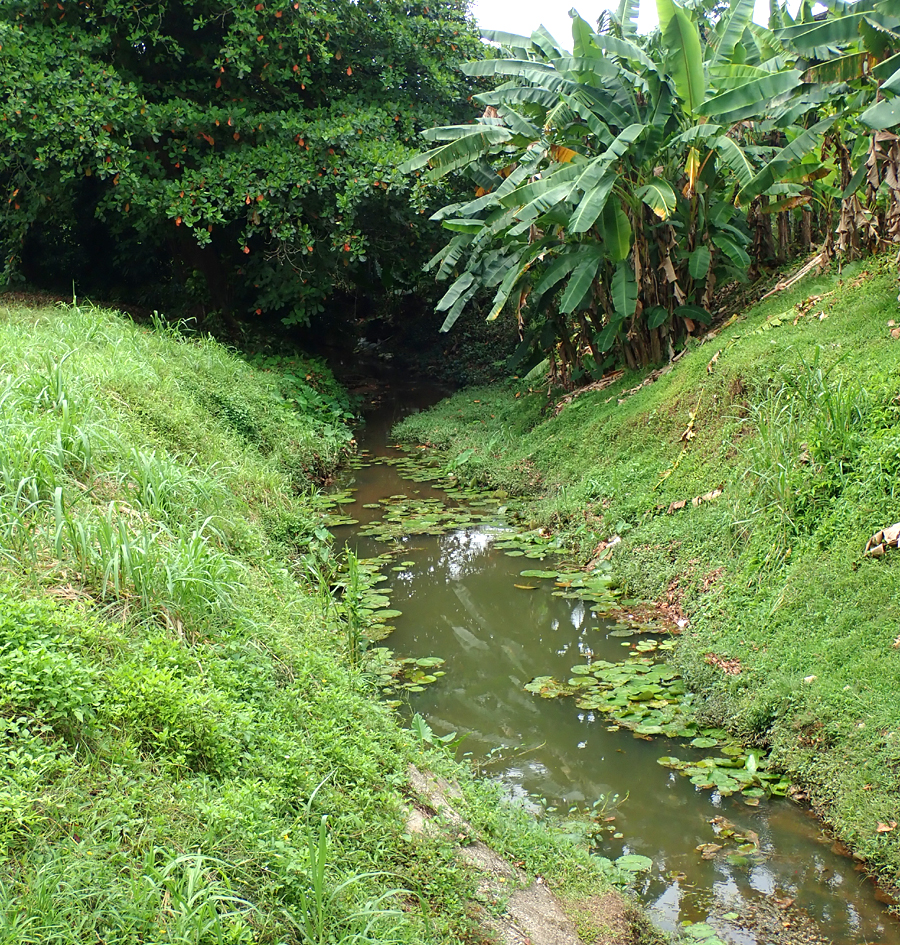
There is a nice small forest with large mature trees next to the plot I am farming in Khatib. It is nice to hear the songs of a few straw headed bulbuls from the forest in the morning. Besides this endangered songbird, I have seen other nice birds such common kingfisher, Javan or Chinese pond heron, Lesser whistling-duck, etc. The nearby stream and ponds provide habitats for fish and dragonflies too.

It is very sad that these habitats are being destroyed. Part of the forest is already cleared. This happens because a SCDF clubhouse is to be built there, a clubhouse with facilities like gym, swimming pool, KTV, prawn fishing, etc., all for human entertainment.


Apparently, herbicide was used to kill the long grass.
Besides the S$78 million, energy and materials used to build the clubhouse, there are other costs. The ecological services that the forest and its creatures have been providing for many years will be lost. The trees can no longer sequester CO2 and provide fresh air to us. The soil, together with the soil creatures, can no longer clean the water for us. Without the water holding capacity of the soil, we must work harder to prevent floods.

Press-kill the soil with construction debris

I wonder if a proper environmental impact assessment had been carried out.

My two friends and I went into the destroyed part of the forest and salvaged a few wheelbarrows of soil (together with some soil creatures like earthworms, of course) and transferred to our farming plot. We found a beautiful feather of a bird on the damaged land. My ornithologist friend told me that it was an outer wing primary feather of a raptor. It is not surprising because the large mature trees in the forest and the surroundings can support a majestic bird like a raptor. But the bird is probably gone now. The degraded habitats in the area also explains the disappearance of two nice dragonfly species: Bronze Flutterer (Rhyothemis obsolescens) and Sapphire Flutterer (Rhyothemis triangularis).

We salvaged some forest soil and added to our plot.
An outer wing primary feather of a raptor, picked up from the damaged land.

I hope to see more climate change efforts and nature conservation in Singapore.

I admire governments which put forward far-sighted policies and initiatives such as Australia's Carbon Farming Initiative, where farmers are paid for sequestering carbon, and France's 4 per 1000 initiative, which encourages farmers and organizations to increase soil carbon content (in the form of soil organic matter) by 0.4% annually in order to offset global carbon emissions.

Soil is little regarded in Singapore. It does not make sense that our armed forces are working so hard to defend our land, while we ourselves are destroying our soils everyday.

This is a quote by Franklin D. Roosevelt:
"A nation that destroys its soils destroys itself. Forests are the lungs of our land, purifying the air and giving fresh strength to our people."